Ultra-high-strength metallic materials are urgently required in aerospace and defense applications, where weight reduction and extreme load-bearing performance are critically important. Developing advanced alloys that simultaneously achieve ultra-high yield strength (σy ≈ 2 GPa) and appreciable uniform elongation (εu > 5%) has therefore emerged as a key research focus. To date, only a limited number of high-strength steels and compositionally complex alloys have reached this performance regime. Compared with steels and multicomponent alloys, titanium alloys offer substantially higher specific strength and superior corrosion resistance. Despite extensive efforts dedicated to strengthening and toughening titanium alloys, no alloy system has yet achieved a yield strength of 2 GPa while maintaining uniform elongation above 5%.
Addressing this challenge, a research team led by Academician Jun Sun at the State Key Laboratory for Mechanical Behavior of Materials, Xi’an Jiaotong University—specifically Associate Professor Wei Chen and Professor Jinyu Zhang—in collaboration with Xinjiang Xiangrun New Materials Technology Co., Ltd., has realized a breakthrough through industrial-scale processing combined with a deliberately designed heat-treatment strategy. In a commercial metastable β-titanium alloy, Ti-4Al-5Mo-3V-5Cr-1Fe (wt.%), they established a new microstructural architecture enabling an unprecedented strength–ductility synergy at room temperature: a record-high yield strength of 1929 MPa, an ultimate tensile strength of 2014 MPa, and a uniform elongation of 6.2%. This performance surpasses all previously reported high-strength titanium alloys and delivers a specific strength far exceeding that of high-strength steels and multicomponent alloys (Figure 1).
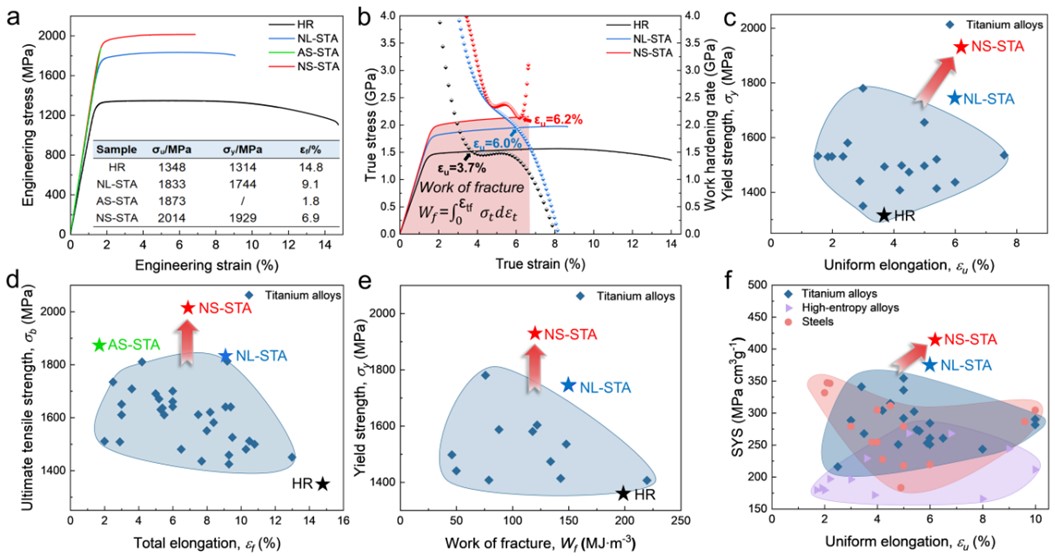
Figure 1. The developed titanium alloy exhibits a record-high strength together with an excellent strength–ductility balance.
The extraordinary mechanical response arises from a carefully engineered microstructure comprising nano-twinned α precipitates and ultrafine β subgrains (Figure 2). High-density nanoscale α precipitates, mediated by ω-phase precursors, provide strong strengthening. More importantly, the formation of twin pairs among these α precipitates generates coherent twin boundaries that effectively accommodate strain incompatibility across semi-coherent α/β interfaces, thereby enhancing ductility. The ultrafine β subgrain boundaries play multiple roles: during deformation they impede dislocation motion and promote strain partitioning, while during aging they stimulate heterogeneous precipitation of nanoscale α laths. Unlike the continuous grain-boundary α films typically found at β grain boundaries, these discontinuous subgrain-boundary α precipitates serve dual functions—acting as dislocation sources to activate plasticity and simultaneously hindering dislocation glide to increase work-hardening capacity and uniform elongation. Furthermore, under high applied stress, chemically induced heterogeneities (Figure 3) strongly interact with dislocations, slowing their motion and enhancing dislocation interactions, which further improves strain hardening and delays the onset of necking.
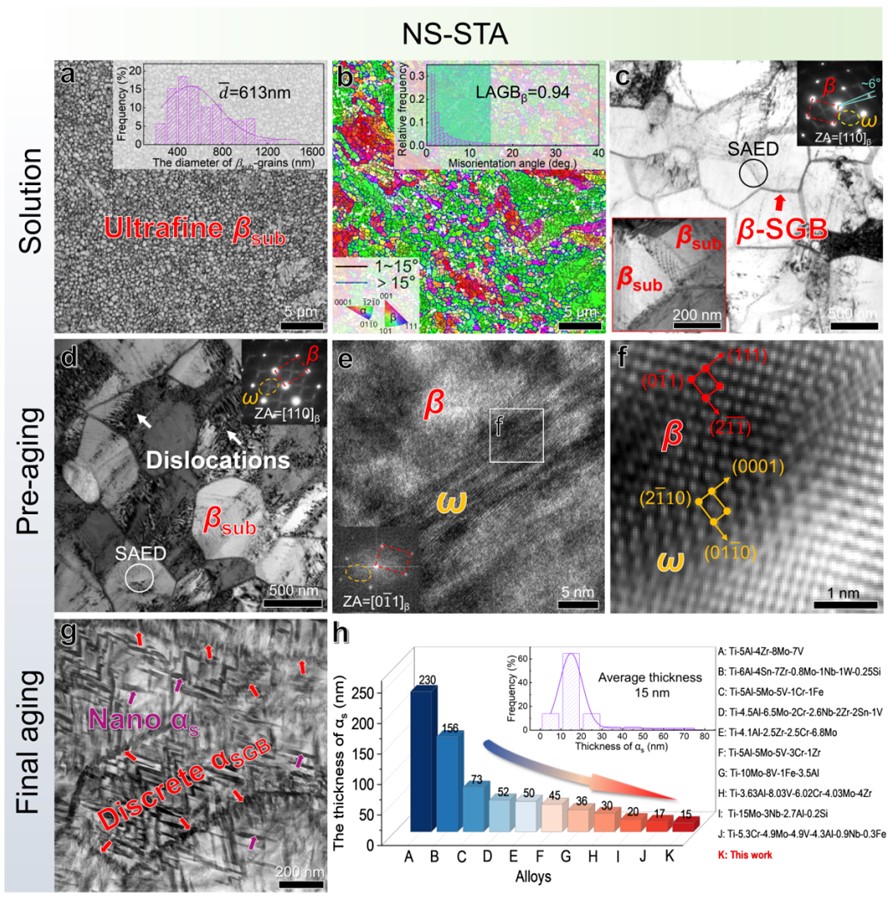
Figure 2. The engineered microstructure comprising nano-twinned α precipitates and ultrafine β subgrains.
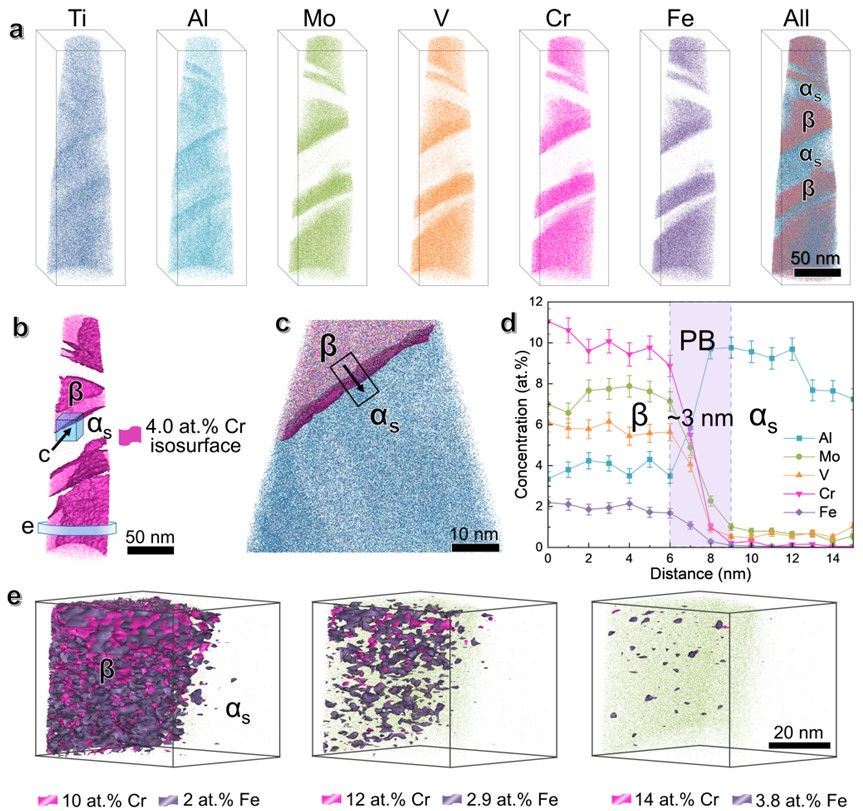
Figure 3. Localized chemical element segregation present within the microstructure.
This study not only pushes the strength limit of titanium alloys but also demonstrates that the “nano-twinned α precipitates + ultrafine β subgrains” design strategy is fully compatible with industrial-scale processing, highlighting its significance for developing engineering-grade ultra-high-strength titanium alloys. Moreover, the proposed microstructural design concept is broadly applicable to aluminum alloys, magnesium alloys, steels, and complex multicomponent alloys, particularly those produced by additive manufacturing that inherently contain dislocation-based substructures.
The work has been published in Advanced Science under the title “Designing Ductile 2-GPa Yielding Titanium Alloys via Multifunctional Subgrain Boundaries and Nanoprecipitates.” Doctoral student Dingxuan Zhao, master’s student Kai Zu, Dr. Hang Zhang, and Chief Engineer Xu Yue from Xinjiang Xiangrun New Materials Technology Co., Ltd. are co-first authors. Associate Professor Wei Chen and Professor Jinyu Zhang served as corresponding authors. Academician Jun Sun supervised the study. The State Key Laboratory for Mechanical Behavior of Materials is the primary corresponding institution. This research was supported by the National Key R&D Program of China and the National Natural Science Foundation of China. The authors gratefully acknowledge the Analytical & Testing Center of Xi’an Jiaotong University, especially Dr. Jiao Li, Dr. Chao Li, and Dr. Zijun Ren, for their assistance with materials characterization.
Paper link: https://doi.org/10.1002/advs.202519918


