One of the core issues in spintronics is how to manipulate spin polarization in magnetic materials so as to yield multiple information states for information storage. Among the various spin manipulation schemes, optical approaches are contactless, non-invasive, and easily tunable. They are not constrained by the symmetry of the material platform, making them one of the effective routes to inducing spin torque. However, in nonlinear opto-magnetic coupling processes, the spin accumulation and spin torque generally depend strongly on the spin-orbit coupling strength of the material. To enhance the light-induced spin torque, the material platform must contain heavy elements, which severely limits the range of usable materials.
To overcome this bottleneck, Prof. Jian Zhou’s group at the Center for Alloy Innovation and Design, School of Materials Science and Engineering, Xi’ an Jiaotong University, proposed a pronounced nonrelativistic optically-induced spin torque (NR-OIST) effect in noncollinear magnets, which enables an opto-magnetic coupling process dominated purely by the magnetic exchange interaction rather than by spin-orbit coupling. Building on the group’s earlier theoretical work, they used a density-matrix perturbation approach together with spin-group theory to reveal the quantum-geometric origin of this light-induced torque in the Bloch wavefunctions. They also demonstrated that opto-magnetic coupling in noncollinear magnetic materials can arise in the nonrelativistic limit, and clarified how the polarization of light determines the direction of the induced torque (Fig. 1).
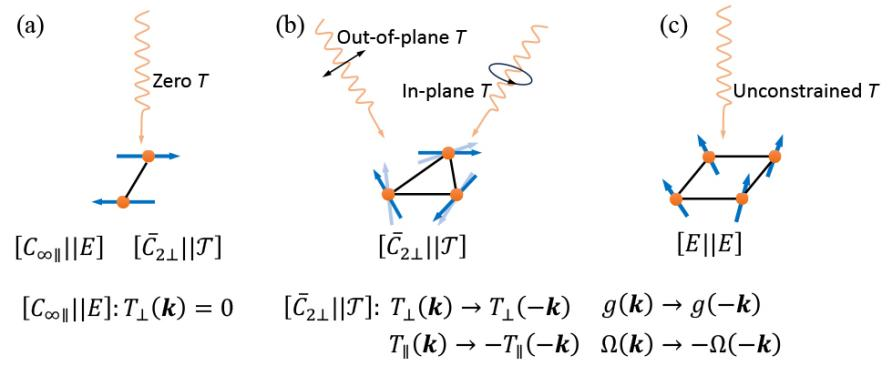
Fig. 1 Spin-group constraints on the nonrelativistic spin torque imposed by spin-space symmetry.
This scheme is broadly applicable. Based on spin-group theory, they enumerated the spin point groups of all coplanar magnetic structures and the site spin groups occupied by the magnetic atoms, and derived the symmetry theory of the corresponding NR-OIST response tensors. They then took several Kagome materials (e.g., Mn3Ge and Mn3Sn) as examples and calculated their NR-OIST using the software package developed in-house by the group (Fig. 2). The results show that under moderate light intensity, each Mn atom can experience a local effective magnetic field of about 30 Tesla, being 1–2 orders of magnitude stronger than that of the conventional process induced by spin-orbit coupling. This torque drives a picosecond-scale canting oscillation of about 0.1 rad in the 120° coplanar spin configuration, producing a long-lived, detectable net magnetic moment. This work extends the range of applicability of nonlinear opto-magnetic response theory and provides a new theoretical scheme for the optical manipulation of spin in noncollinear magnets.
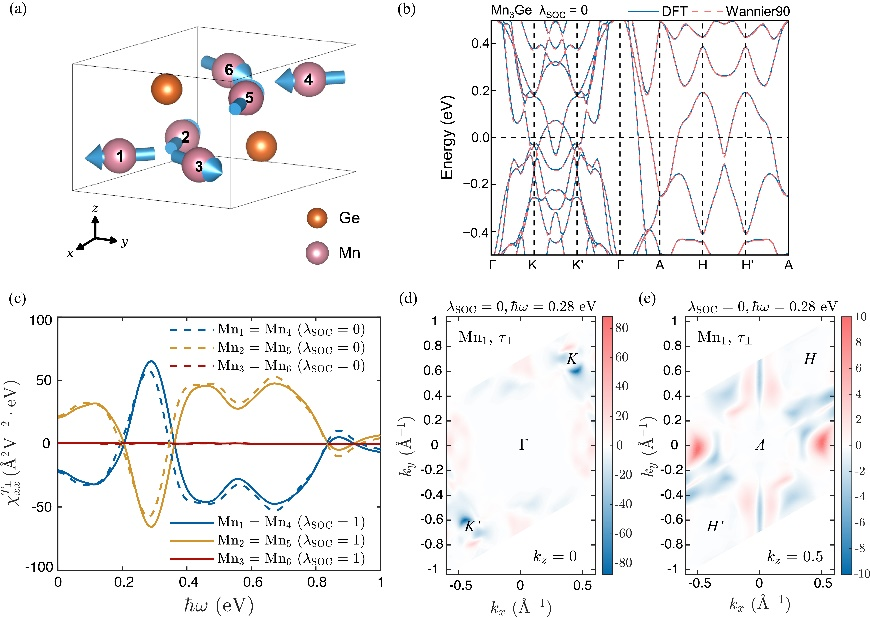
Fig. 2 Numerical results of the nonrelativistic OIST effect in kagome crystals.
The above work was recently published in the leading physics journal Physical Review Letters (Phys. Rev. Lett. 2026, 137, 186905) under the title “Nonrelativistic Optically-Induced Spin Torque in Noncollinear Magnets”, and was selected as an Editors’ Suggestion. The paper was completed jointly by Zhiyuan Li, a master’s student in the group, and Prof. Jian Zhou. The work was supported by the National Natural Science Foundation of China and the 111 Project.
Link to the paper: https://doi.org/10.1103/vcvp-w5fd
Link to the raw data: https://doi.org/10.57760/sciencedb.015am


