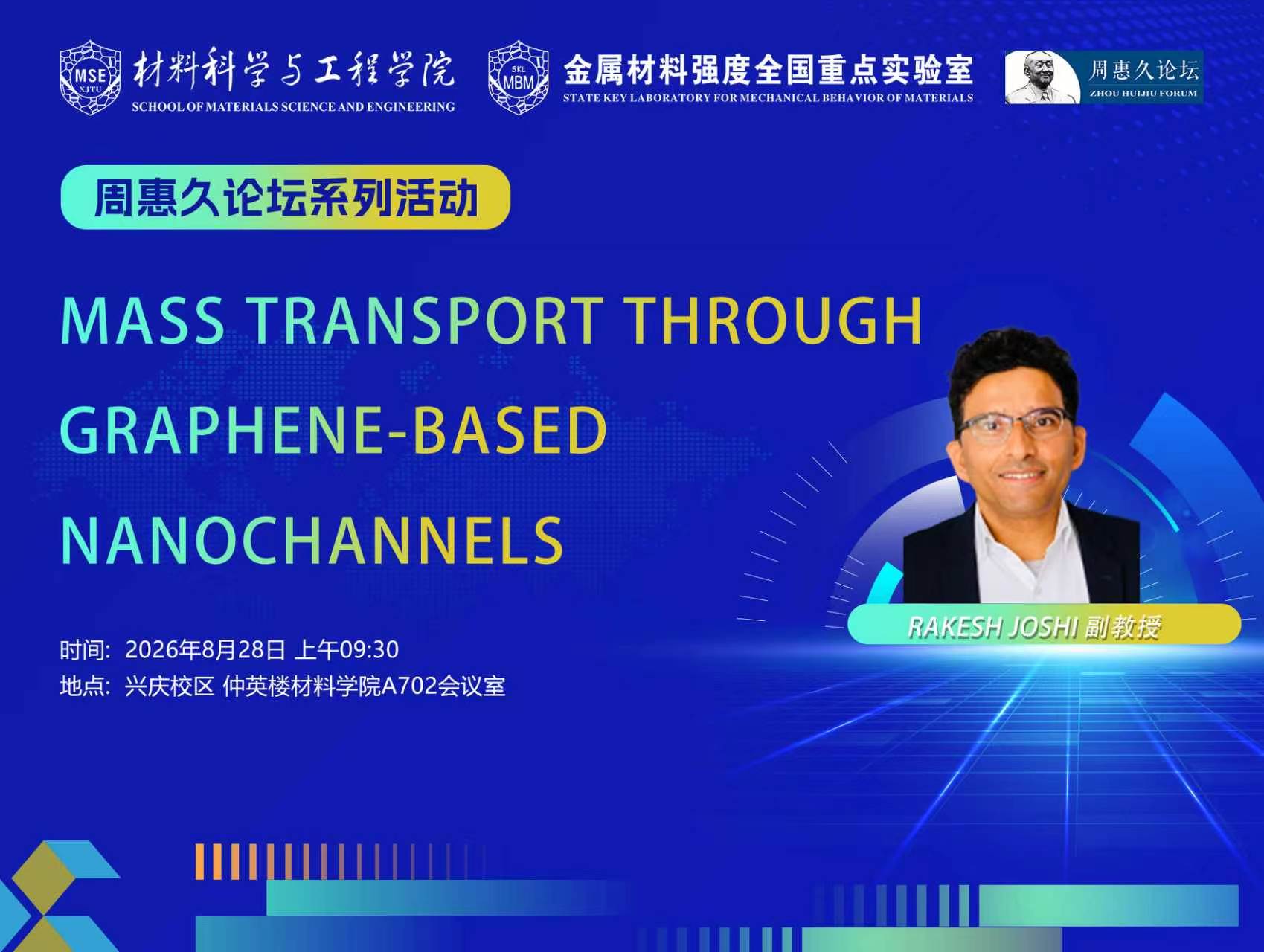
邀请讲座人:Rakesh Joshi 副教授
简介:Rakesh Joshi is an Associate Professor in the School of Materials Science and Engineering at the University of New South Wales (UNSW), Sydney, where he leads the Graphene Research Group and serves as Theme Leader for Energy and Environment. His research focuses on graphene and related two-dimensional materials, particularly the design of nanoscale channels and interfaces for selective mass transport, membrane separation, environmental technologies, and energy-related applications. His work combines fundamental investigations of structure-property relationships with the development of practical materials and membranes.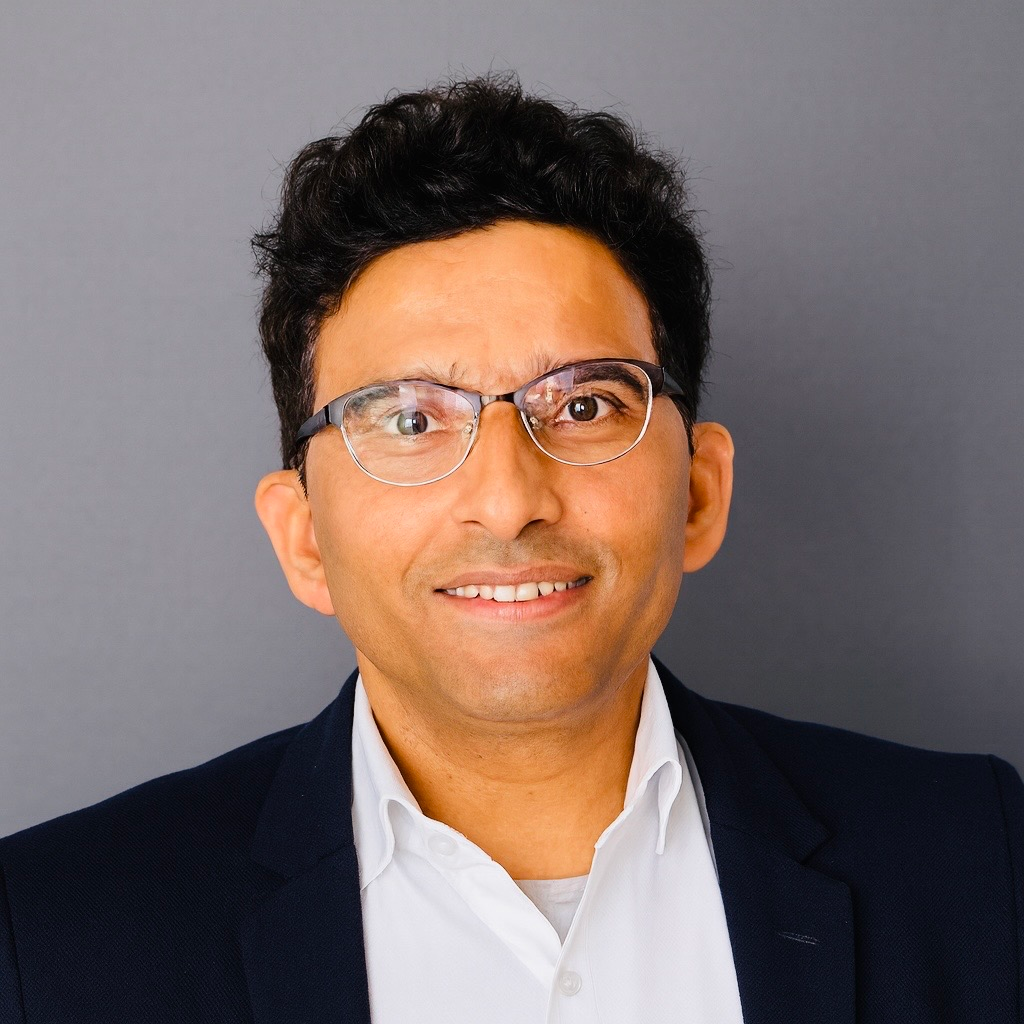
Before joining UNSW, A/Prof Joshi was a Marie Curie International Fellow at the University of Manchester, where he worked with Nobel Laureate Sir Andre Geim. He has published more than 130 journal articles, including over 95 as lead or first author, and holds five international patents. He also leads multiple industry-funded research projects in graphene-based technologies, reflecting a strong emphasis on translating advanced materials research toward real-world outcomes.
A/Prof Joshi has received several prestigious international fellowships, including the Marie Curie Fellowship of the European Union, the Japan Society for the Promotion of Science (JSPS) Fellowship and the Alexander von Humboldt Fellowship in Germany. He has also received a recent VAIBHAV Fellowship from the Government of India. He is a Fellow of the Royal Society of Chemistry.
【报告题目】Mass Transport through Graphene-Based Nanochannels
时间: 2026年08月28日 上午09:30
地点: 兴庆校区 仲英楼材料学院A702会议室
摘要:Graphene-based membranes contain angstrom-scale channels that can be precisely engineered to control the selective movement of water molecules, gases and dissolved ions. This talk will highlight recent progress in the interlayer engineering of graphene oxide (GO) laminates and show how nanoscale channel dimensions, surface chemistry and hydration can be tuned to regulate transport through ångström-scale pathways.
A key focus will be the relationship between GO structure and transport behaviour. In layered GO membranes, interlayer spacing, chemical functionality and the local hydration environment together determine how water molecules, gases and dissolved ions move through the membrane. Cation intercalation offers a practical way to modify these nanochannels by introducing moisture-attracting sites within the lamellar structure. This approach enables control of water transport and reveals clear relationships between membrane structure and hydrated-ion size.
 The talk will also present applications in water purification, selective gas separation and moisture adsorption, together with recent work on improving membrane stability in both flat-sheet and hollow-fibre configurations. These examples demonstrate how interlayer engineering can be translated from laboratory-scale laminates into more practical membrane architectures. Overall, the work shows how careful control of nanochannel dimensions, interfacial chemistry and hydration can expand the potential of graphene-based materials for environmental and separation technologies.
讲座可盖章


