
Welcome to Xi an Jiaotong University School of Materials Science and Engineering
- 中文
- |
-


News & Events
News
-
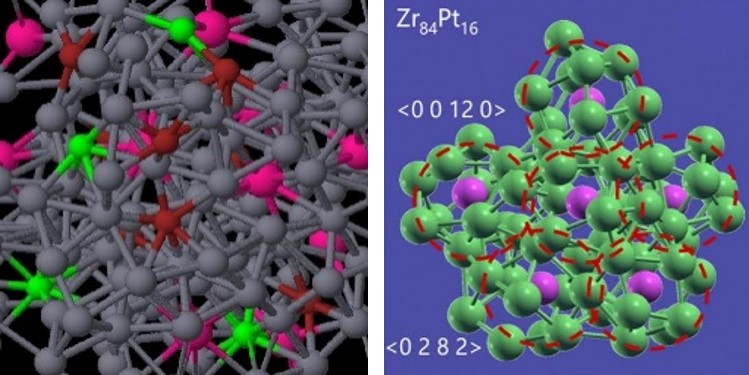 XJTU-CAID Publishes in Advanced Materials: Key Structural Motifs Governing Deformation and Phase Change in Amorphous Alloys
Most engineering alloys are crystalline. When crystallization is bypassed by rapid quenching, the resulting alloy—though macroscopically indistinguishable from conventional metals—lacks long-range crystalline order (Fig. 1, left). A wide range of elements and combinations can form amorphous states, including elemental Ta and Au; binary, ternary, and multicomponent systems such as Ni–B, Cu–Z...
Date 2025-11-17 -
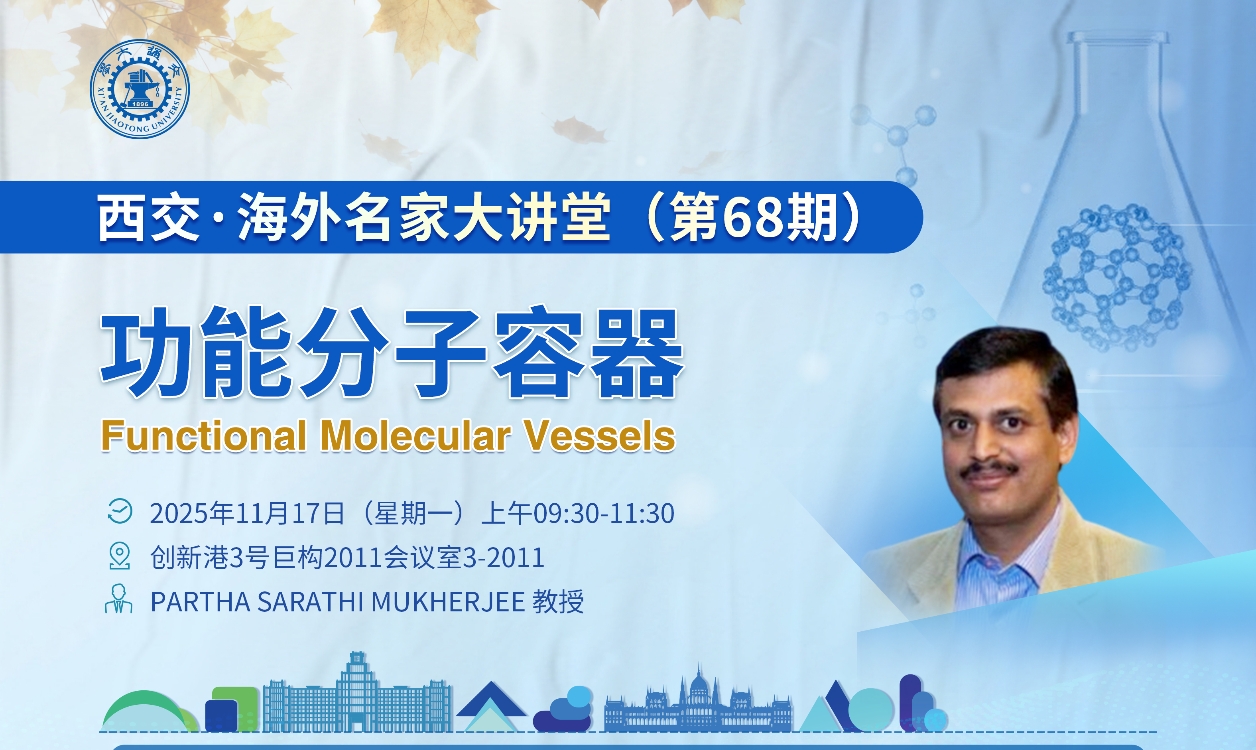 Functional Molecular Vessels 功能分子容器Date 2025-11-14
 -
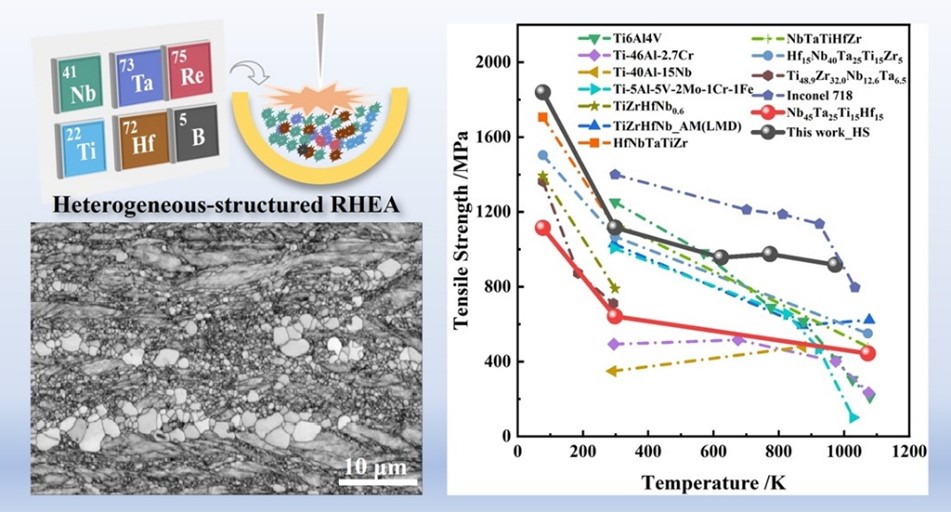 CAID Reports Progress on high-strength RHEAs from 77 K to 973 K
In aerospace, nuclear energy, and advanced manufacturing, structural materials must operate reliably from cryogenic to high temperatures. Conventional alloys face a persistent strength–ductility trade-off: strengthening typically comes at the expense of tensile elongation, and high-temperature strength degrades sharply. Refractory high-entropy alloys (RHEAs)—composed of high-melting elements ...
Date 2025-10-31 -
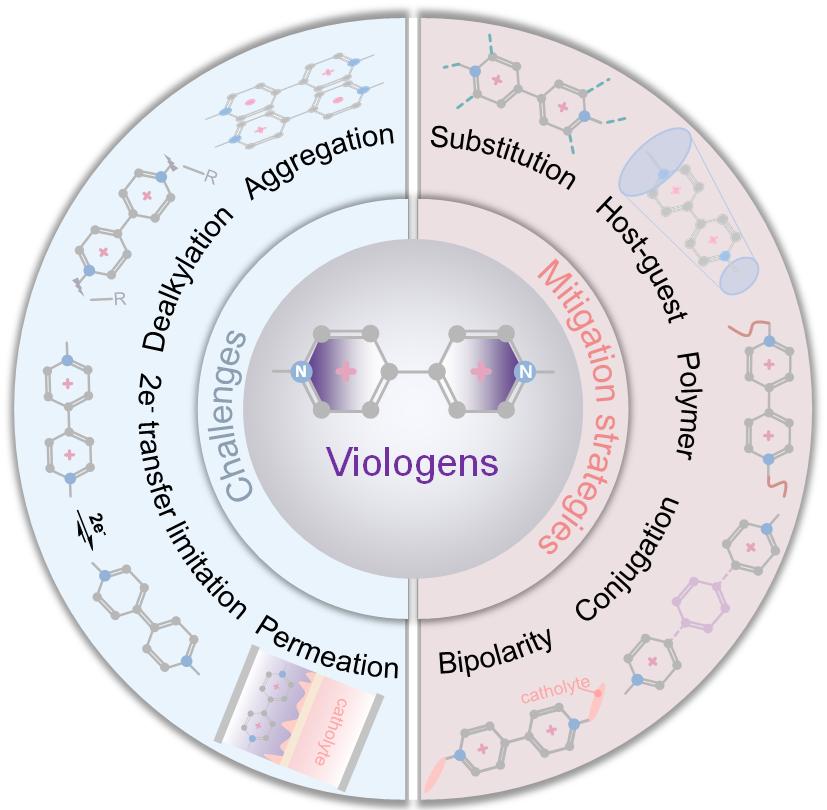 XJTU Team Advances Large-Scale Energy Storage with Aqueous Organic Redox Flow Batteries
Under China’s “dual-carbon” goals, photovoltaic and wind power are becoming central to the energy mix, yet their intermittency and volatility impede large-scale grid integration. Aqueous organic redox flow batteries (AORFBs) are an attractive storage solution because of their low cost, intrinsic safety, and decoupled power/energy design. Among anolytes, viologen derivatives are widely used...
Date 2025-10-22 -
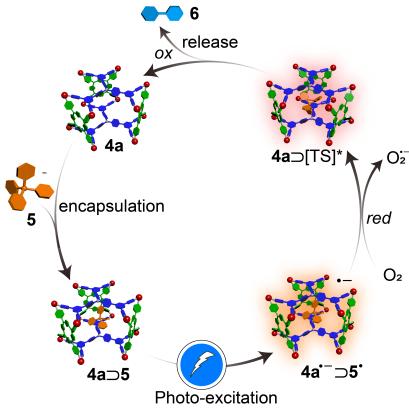 XJTU Researchers Achieve Breakthrough in Visible-Light Photocatalysis Using Heteroleptic Metallacages
Photocatalysis is a promising approach for sustainable chemical synthesis, but its efficiency relies on precise control of electron transfer dynamics—a challenge that natural photosynthesis inspires but artificial systems struggle to replicate. While crystalline frameworks offer ordered structures for directing charge transport, their dense packing limits mass transport and light penetration. ...
Date 2025-10-17 -
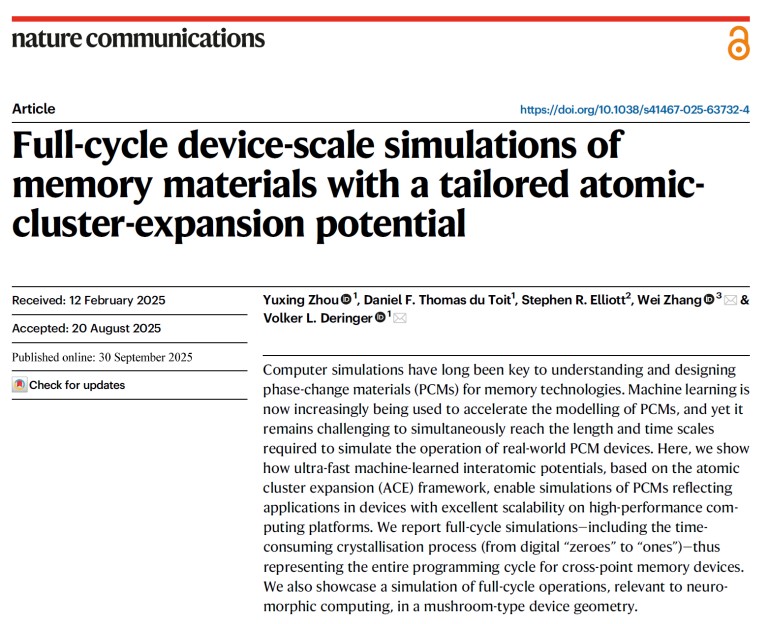 Full-cycle device-scale atomistic simulations of phase-change memory enabled by an ultrafast machine-learning potential
A recent study has marked a significant breakthrough in atomic-scale simulations of phase-change memory (PCM) devices, providing a powerful theoretical tool for the research and design of next-generation memory devices and neuromorphic computing chips. The paper, titled “Full-cycle device-scale simulations of memory materials with a tailored atomic-cluster-expansion potential”, was published ...
Date 2025-10-14 -
 CAID at XJTU Publishes a Focus Article on strong-yet-ductile alloys in Science Advances
The yield strength and tensile plasticity of metallic materials are crucial for engineering applications. High strength can meet load-bearing requirements and significantly reduce material usage, thereby conserving energy and lowering emissions. High plasticity enhances the safety of materials during service, and its most important engineering significance lies in the ability for uniform deform...
Date 2025-10-10 -
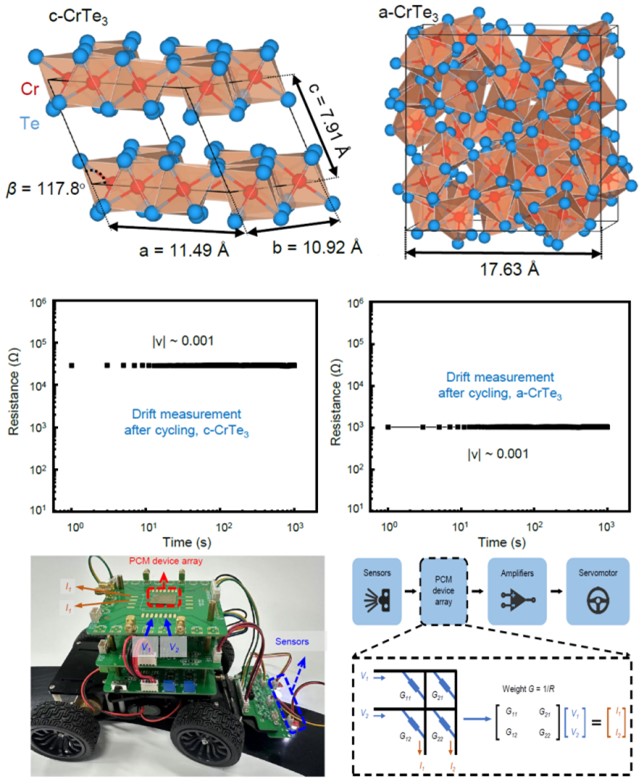 The “no drift phase-change material” developed by the Center for Alloy Innovation and Design (CAID) of Xi’an Jiaotong University was published in Nature Materials
Nature Materials published the research article “Amorphous phase-change memory alloy with no resistance drift” online on October 1, 2025.Phase change memory utilizes the resistance difference between the amorphous and crystalline phases of chalcogenides to achieve data storage. However, amorphous materials typically exhibit spontaneous structural relaxation. For phase-change materials (such a...
Date 2025-10-02 -
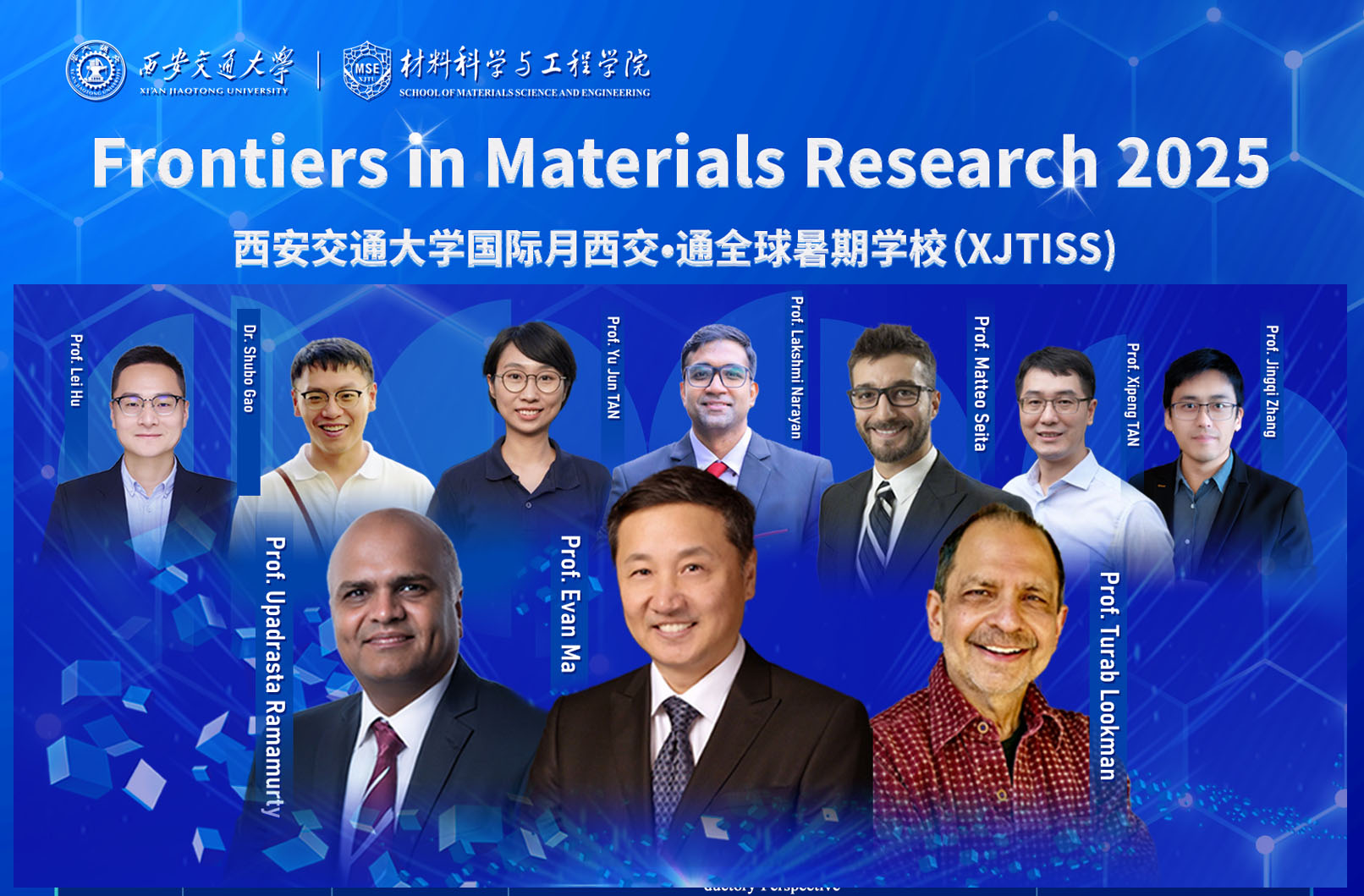 Xi’an Jiaotong University Successfully Concludes 2025 International Summer School on Frontiers in Materials Research
Global Experts Gather to Explore Cutting-Edge Advances in Materials ScienceXI’AN, China – July 5, 2025 – The 2025 Xi’an Jiaotong International Summer Session (XJTISS), co-organized by the Materials Sub-Alliance of the University Alliance of the Silk Road (UASR-MSESA) and School of Materials Science and Engineering,Xi’an Jiaotong University (XJTU-MSE), successfully concluded on July 4th. T...
Date 2025-07-10 -
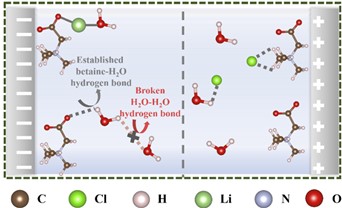 Breakthrough in Aqueous Supercapacitors: Betaine-Modified Interface Boosts Energy Density
Aqueous supercapacitors have garnered significant attention due to their exceptional capacitive properties, high safety, and environmental friendliness. However, the narrow electrochemical stability window of water (1.23 V) limits the energy density of these devices, hindering their practical applications.To address this challenge, a research team led by Professor Lei Li has developed an inno...
Date 2025-07-04
Copyright © 2009-2011 School of Material Science and Engineering, Xi’an Jiaotong University. All rights reserved