
Welcome to Xi an Jiaotong University School of Materials Science and Engineering
- 中文
- |
-


News & Events
News
-
 2026 Xi'an Jiaotong International Summer Session (XJTISS)
2026 Xi'an Jiaotong International Summer Session (XJTISS)Dr. R. Lakshmi NarayanTitle:Effect of long-term ageing and associated precipitation on the fatigue and creep behavior of a Ni-based superalloy标题:长期时效及相关析出相对镍基高温合金疲劳与蠕变行为的影响Biography:Dr. R. Lakshmi Narayan is an Associate Professor at IIT Delhi. His research centers on fracture, fatigue, creep and structure ...
Date 2026-07-09 -
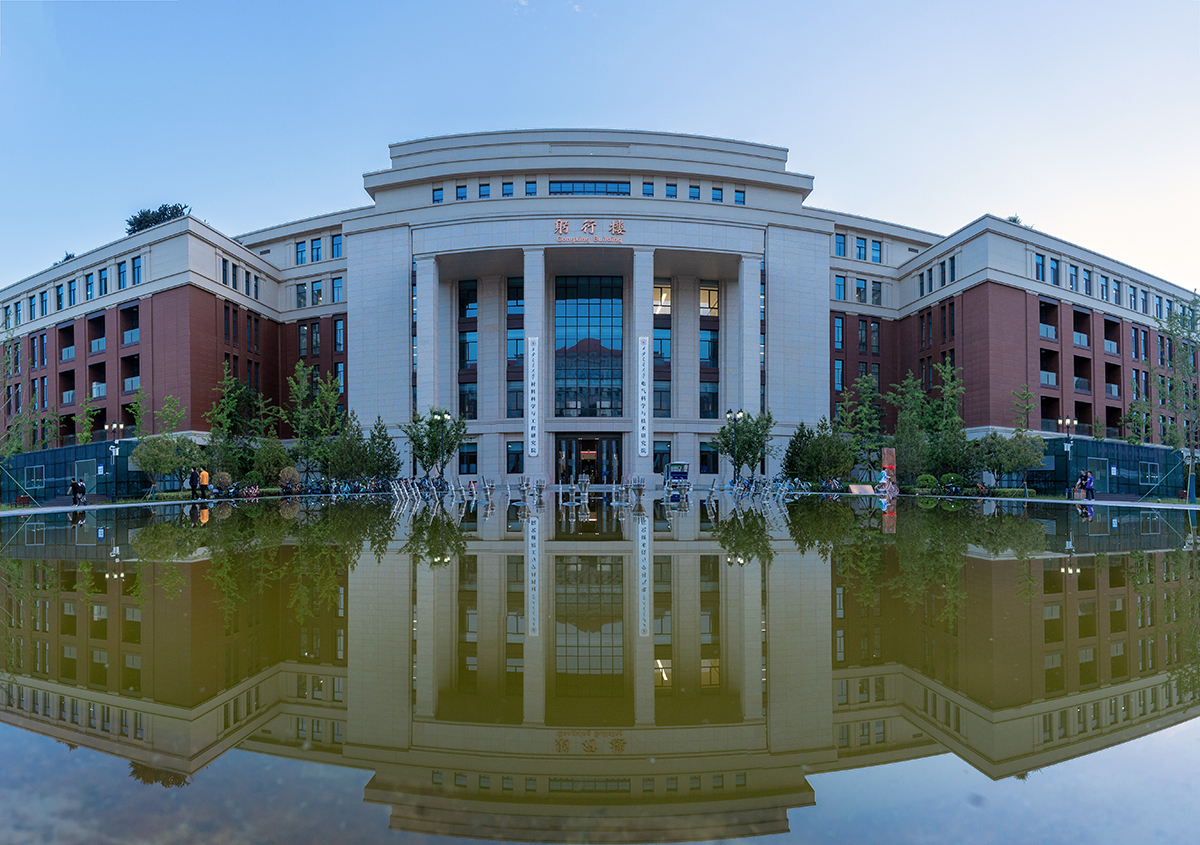 MSE welcomes the students from all over the world to apply the 2026 Degree Programs
Start Planning Your ApplicationWe welcome students from all over the world, if you want to excel beyond, expand your expertise, undertake professional experience, change ideas and even change the world,School of Materials Science and Engineering (MSE) is definitely a wise choice! There are also the possibility of involvement in industry-based projects, overseas study, work opportunities and gr...
Date 2025-11-25 -
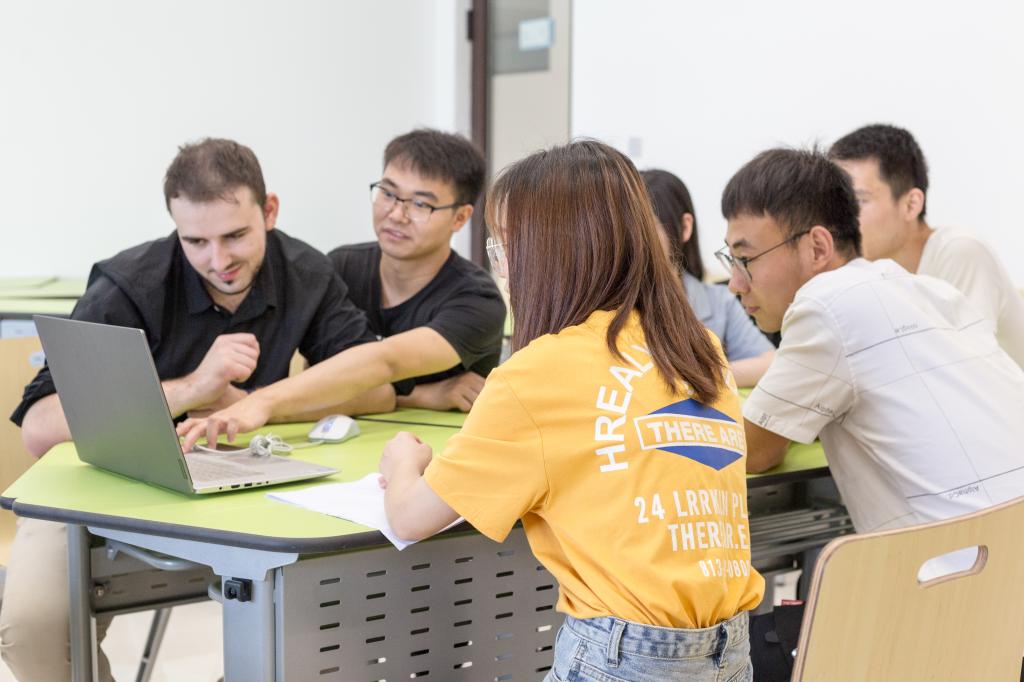 MSE/XJTU is ready to accept international undergraduates
The School of Materials Science and Engineering at XJTU has launched an international program with all courses taught in English and will begin accepting international undergraduate students starting in September 2025.About MSE/XJTUXi’an Jiaotong University (XJTU), established in 1896, is a national key university directly administered by the Ministry of Education of China. It is one of Chin...
Date 2025-06-20 -
 【ZHOU HUIJIU FORUM】新型柔性薄膜光伏模组印刷加工
邀请讲座人: 陈义旺 教授报告题目: 新型柔性薄膜光伏模组印刷加工时间: 2026年10月12日下午2:30地点: 仲英楼 材料学院 第一会议室A245-A247简介:陈义旺,赣南师范大学党委书记,南昌大学和江西师范大学博士生导师,国家级人才项目获得者,入选国家“万人计划”科技创新领军人才,国家百千万人才工程,德国洪堡奖学金获得者,享受国务院特殊津贴,江西省化学化工学会理事长,中国化学会会士,英国皇家化学会会士,教育部科技委...
Date 2026-10-13 -
 【ZHOU HUIJIU FORUM】基于物理演化过程的智能计算
邀请讲座人:沈健 教授报告题目: 基于物理演化过程的智能计算时间: 2026年10月15日上午10:00地点:兴庆校区 仲英楼 第一会议室简介:沈健,国家级人才项目获得者(2007、2009)、美国物理学会会士(Fellow,2011),复旦大学“浩清”讲席教授 (2009),曾任复旦大学物理系主任(2010-2020),现任复旦大学应用表面物理全国重点实验室主任、微纳电子器件与量子计算机研究院院长、微纳加工公共实验室主任、中国物理学会磁学专委会...
Date 2026-10-10 -
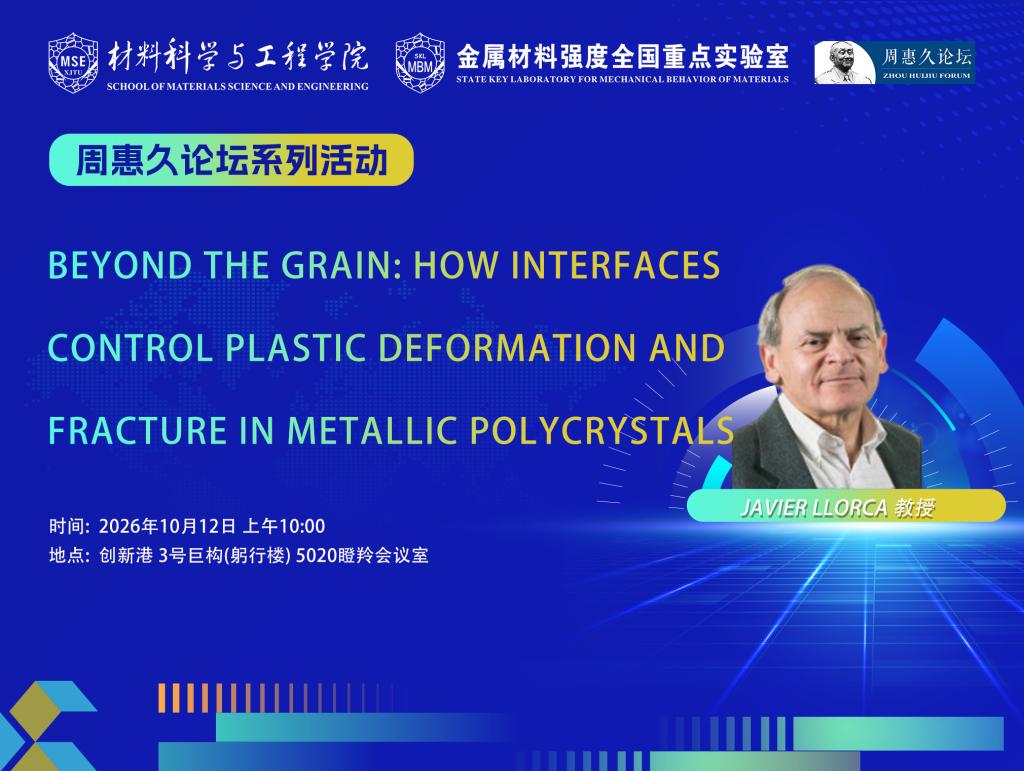 【ZHOU HUIJIU FORUM】Beyond the grain: How interfaces control plastic deformation and fracture in metallic polycrystals
Invited Speaker:Prof. Javier LLorcaReport Title: Beyond the grain: How interfaces control plastic deformation and fracture in metallic polycrystalsTime: 10:00 a.m., October 12, 2026Location: Innovation Harbour Campus, Building 3 (Gongxing Building), Gazelle Meeting Room 5020Introduction:Prof. Javier LLorca is scientific director and founder of the IMDEA Materials Institute, where he leads t...
Date 2026-10-10 -
 Professor Wei Zhang Won Ovshinsky Lectureship Award
On 21 September 2026, Professor Wei Zhang from the School of Materials Science and Engineering at Xi’an Jiaotong University was conferred the Ovshinsky Lectureship Award at the 24th European Phase-Change and Ovonics Symposium (E\PCOS), held in Leuven, Belgium.Established in 2014 in memory of Stanford Ovshinsky, the founding father of phase-change memory field, the Ovshinsky Lectureship Award i...
Date 2026-10-09 -
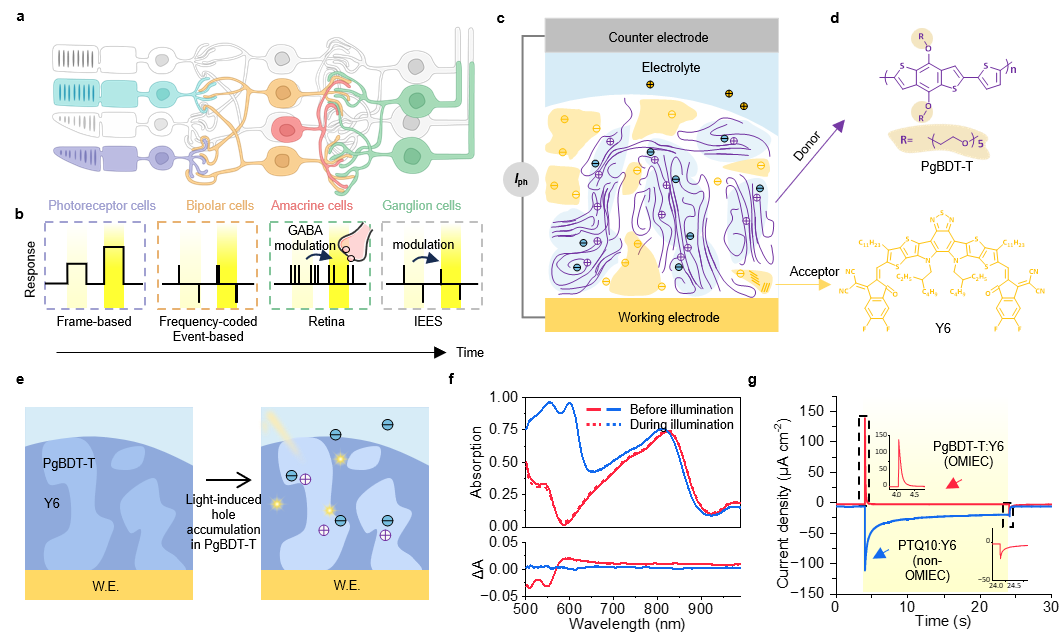 Published in Nature Materials: Xi’an Jiaotong University Develops Amplitude Programmable Event Vision Sensors
Event vision is highly effective at detecting changes in dynamic scenes, yet it remains challenging to simultaneously encode the magnitude of those changes. Researchers at the State Key Laboratory for Mechanical Behavior of Materials at Xi’an Jiaotong University have addressed this limitation by introducing information-weighting capability directly into the intrinsic photoresponse of organic m...
Date 2026-10-08 -
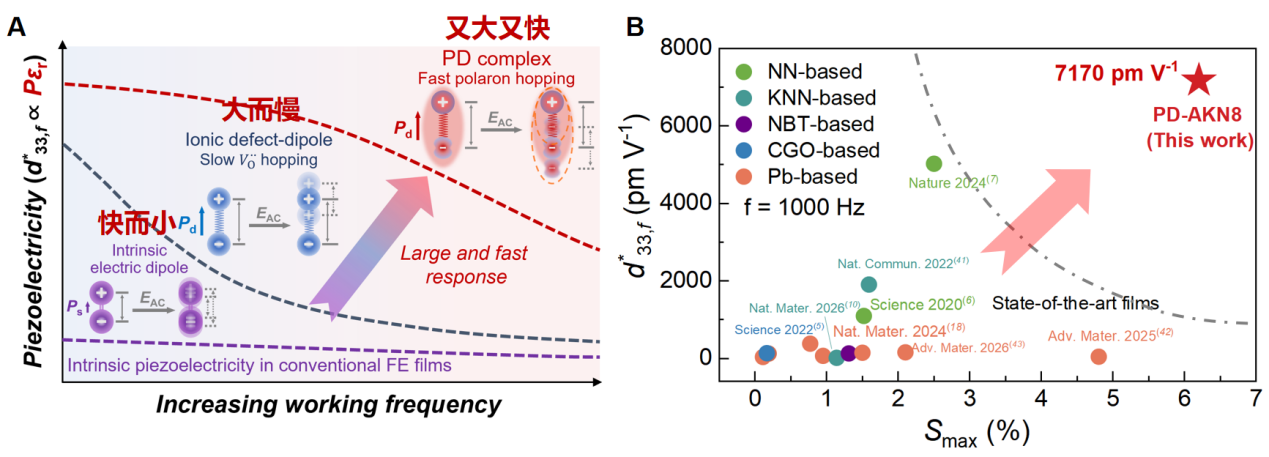 Xi’an Jiaotong University Team and Collaborators Report Ultrahigh Kilohertz Rate Piezoelectric Thin Film Performance in Science
OverviewCombining a large response amplitude with high-frequency operation is a central requirement for piezoelectric materials used in ultrasonic transduction, precision actuation, microelectromechanical systems (MEMS), and related applications. Achieving both simultaneously, however, has remained a long-standing scientific challenge. Recently, Professor Haijun Wu’s group, part of the researc...
Date 2026-10-08 -
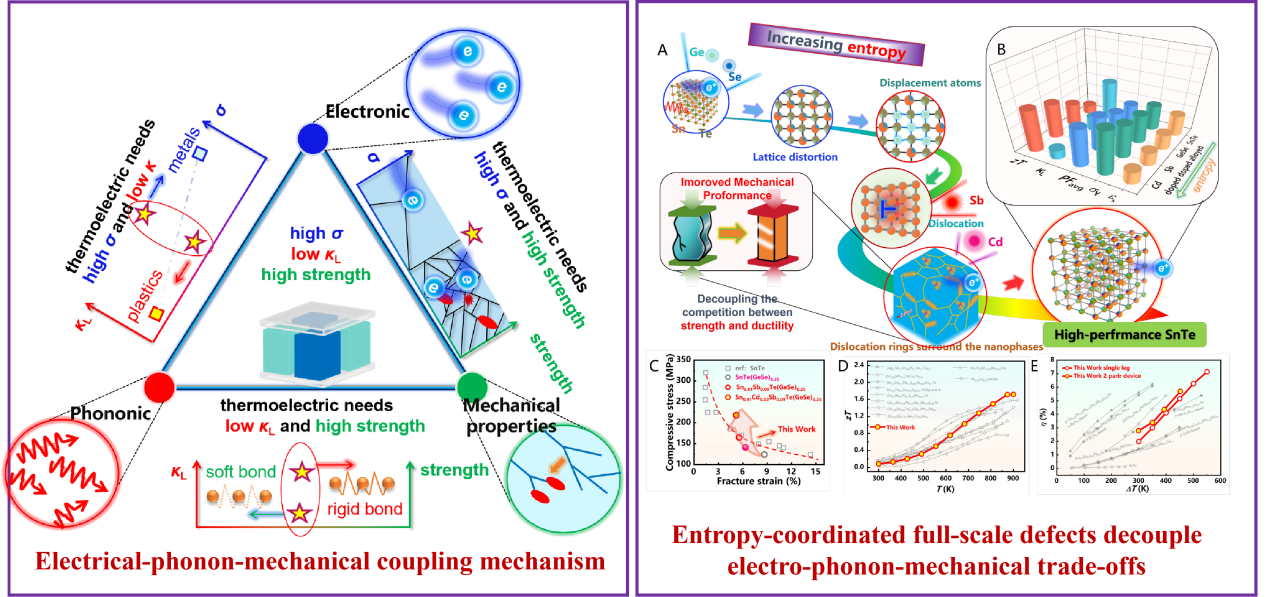 Progress in Design of High Strength and High Efficiency Thermoelectric Materials
State Key Laboratory for Mechanical Behavior of Materials, School of Materials Science and Engineering, Xi’an Jiaotong UniversityResearch BackgroundPractical deployment of high-performance thermoelectric materials relies not only on superior energy-conversion efficiency but also heavily on mechanical reliability during processing, assembly, welding, and thermal-cycling service conditions. For ...
Date 2026-10-08
Copyright © 2009-2011 School of Material Science and Engineering, Xi’an Jiaotong University. All rights reserved