Research Background
Since the invention of the electron microscope in the 1930s, humanity’s exploration of the microscopic world has never ceased. With the commercialization of aberration correctors (Aberration Correctors) in the early 21st century, the resolution of Scanning Transmission Electron Microscopes (STEM) surpassed the sub-angstrom limit, enabling direct observation of atomic column arrangements in crystalline materials. This breakthrough in hardware technology has pushed materials science into a new dimension: no longer are we content with observing the microstructure of materials, but we are beginning to understand their structure-performance relationships at the atomic scale.
However, the advancement of hardware has also brought significant challenges in data processing. A typical high-resolution HAADF-STEM (High-Angle Annular Dark-Field STEM) image contains millions or even tens of millions of pixels, each holding information on the position, intensity, and shape of hundreds or thousands of atomic columns. For functional materials, especially ferroelectrics, multiferroics, and catalysts, the small displacements (typically in the range of a few picometers to tens of picometers) or slight distortions in the lattice often determine macroscopic physical properties, such as polarization strength or catalytic activity. Therefore, the ability to rapidly and accurately extract atomic coordinates from large pixel datasets, i.e., “Quantitative Electron Microscopy,” becomes the key bridge between microstructure and macroscopic performance.
Article Overview
A research team led by Professor Hai-Jun Wu from the State Key Laboratory for Mechanical Behavior of Materials at Xi’an Jiaotong University has published an article titled "STEMax_PF: Accurate and Fast Peak-Finding for Atom Quantitative Analysis" in the prestigious journal Microstructures (Q1-ranked). They successfully developed software named STEMax_PF, which integrates several advanced image processing algorithms to automate and accelerate atomic peak detection for high-throughput analysis.
This software uses adaptive thresholding, fast normalized cross-correlation, and improved weighted over-determined regression algorithms to achieve seconds-level processing speed for thousands of atomic columns on regular personal computers (about 140 atomic columns per second). It maintains picometer-level precision even under extremely low signal-to-noise ratios. The launch of this tool provides powerful technical support for high-throughput statistical analysis of ferroelectric polarization, lattice distortion, and interface structures.
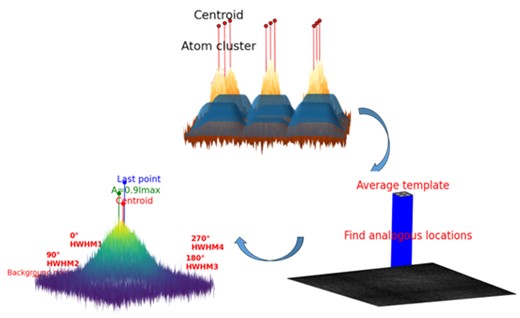
Figure 1. Schematic of the three main algorithms.
a) Atomic clusters are extracted using an adaptive thresholding method, followed by centroiding to obtain preliminary atomic positions.
b) A template is generated and matched with the original image for location identification.
c) For each peak, parameters such as Imax, Full Width at Half Maximum (FWHM), background noise, and centroid coordinates are extracted to estimate all Gaussian fitting parameters, resulting in high-precision atomic coordinates.
Image credit: Original image. Copyright:Zhao, Z.; Qu, W.; Yang, Y.; Peng, G.; Zhou, X.; Song, T.; Zhang, Y.; Guo, S.; Li, F.; Ding, X.; Sun, J.; Wu, H.
Image usage restrictions: News organizations may use or redistribute this image, with proper attribution, as part of news coverage of this paper only.
Innovations
1. “Adaptive Thresholding + Integral Image” Strategy to Overcome Uneven Background
To address the common issue of sample background fluctuations in STEM images, the team introduced an adaptive thresholding algorithm based on integral images. This algorithm dynamically adapts to local background intensity changes, accurately isolating atomic columns from complex backgrounds. It significantly improves the initial positioning accuracy of centroid methods and reduces computational time through the integral image technique.
2. Introduction of Fast Normalized Cross-Correlation (NCC) to Detect Light Elements
Given the challenges posed by weak signals from light elements like oxygen and lithium in STEM imaging, STEMax_PF incorporates an NCC algorithm based on multi-template averaging. By interactively selecting feature templates, the software can sensitively “search” and pinpoint weak atomic signals in high noise, effectively solving key structural characterization problems such as octahedral tilting in perovskite oxides.
3. Improved Linearized Gaussian Regression for Fully Automated Parameter Estimation
To eliminate the reliance on manual experience in traditional Gaussian fitting, the team proposed an improved weighted over-determined regression algorithm. This method not only converts nonlinear fitting into efficient linear solving but also automatically estimates key parameters like peak intensity, FWHM, and background noise from the image. This innovation allows the software to achieve precise fitting for any elemental combination without human intervention, lowering the usage threshold.
4. Exceptional Computational Efficiency and Sub-Picometer Accuracy
Tests have shown that STEMax_PF can process images containing approximately 5,000 atomic columns in just 36 seconds on a regular personal computer (Intel i5 CPU). Under ideal conditions with a signal-to-noise ratio of 50, its positioning accuracy reaches ~1.13 pm. Even under extreme conditions with a signal-to-noise ratio of 5, the error remains below ~4.54 pm, offering both the speed of centroiding and the precision of traditional Gaussian fitting.
5. Wide Applicability and Potential for Application
The software supports mainstream electron microscope and image data formats such as DM3, DM4, JPG, and TIF. It is applicable to various crystal structures, including perovskite and anti-fluorite structures. Research has demonstrated its great potential in analyzing ferroelectric polarization vector fields, lattice distortions in thermoelectric materials, and complex interface defects, providing a reliable tool to establish correlations between microstructures and macroscopic physical properties, such as piezoelectric responses and electron-phonon interactions.
Reference: Zhao, Z.; Qu, W.; Yang, Y.; Peng, G.; Zhou, X.; Song, T.; Zhang, Y.; Guo, S.; Li, F.; Ding, X.; Sun, J.; Wu, H. STEMax_PF: accurate and fast peak-finding for atom quantitative analysis. Microstructures 2025, 5, 20250100.
https://dx.doi.org/10.20517/microstructures.2025.29
Author Biography:
Zhao Zhihao, Master’s student at Xi'an Jiaotong University (recommended for exam-exempted admission to the Master’s program), graduated from Xi'an Jiaotong University. Honors include the National Scholarship, the Xi’an Jiaotong University Outstanding Student Award, and the Special Academic Scholarship. Research focuses on developing atomic-scale quantitative analysis methodologies for aberration-corrected electron microscopy and elucidating structure–property relationships using advanced electron microscopy characterization techniques
Wu Haijun, Professor and Ph.D. Supervisor, School of Materials Science and Engineering and the State Key Laboratory for Mechanical Behavior of Materials, Xi’an Jiaotong University. Bachelor’s and master’s degrees were obtained from Xi’an Jiaotong University, and the Ph.D. degree was obtained from the National University of Singapore. Previously served as a Lee Kuan Yew Postdoctoral Fellow at NUS (one of only 1–3 fellows annually). Selected for the National Young Talent Program and Shaanxi Province “Three Qin Talents”. As chief scientist, leads the key R&D project “Smart Sensors” for the Youth Science Project and serves as principal investigator for two National Natural Science Foundation projects. Recipient of the Charles Hatchett Award (International Ni Materials Major Achievement Award) and the Xiaomi Young Scholar Award. Serves as a board member of the Thermoelectric Materials and Applications Committee of the Chinese Materials Research Society and the Micro and Nano Technology Committee of the Chinese Ceramic Society. Serves as a Youth Editor for journals including J. Adv. Dielectrics, Sci. China Mater., SusMat, InfoMat, Interdiscip. Mater., and DeCarbon. Research focuses on the design, mechanistic analysis, and performance regulation of piezoelectric and thermoelectric materials to meet national demands for high-efficiency electronic functional materials. Author of approximately 100 papers, including publications in Science, Nat. Commun. (14), Adv. Mater. (over 20), and J. Am. Chem. Soc. (9). Total SCI citations exceed 17,000, with an H-index of 69. Recognized by Clarivate as a Highly Cited Researcher from 2021 to 2025.


