Nature Reviews Materials (Impact Factor 86.2) has recently celebrated its 10th anniversary by inviting 12 early-career scientists to reflect on the most transformative breakthroughs over the past decade in key subfields of materials science and to outline critical directions for future research. These 12 focal areas are highlighted in the journal’s latest cover feature (Fig. 1).
Among the invited contributors, Professor Jun Ding from the School of Materials Science and Engineering at Xi’an Jiaotong University, and the State Key Laboratory for Mechanical Behavior of Materials, authored a perspective article in the field of metallic materials entitled “Order or disorder, that is the question in high-entropy alloys.” Centered on the fundamental theme of chemical order versus disorder in multicomponent alloys, the article synthesizes a major paradigm shift in high-entropy alloy (HEA) research over the past decade.
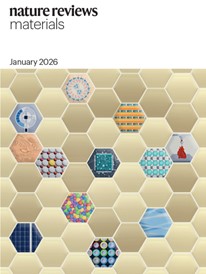
Figure 1. The latest cover of Nature Reviews Materials, summarizing the 12 materials research areas highlighted in the 10th anniversary special issue.
The article challenges the long-standing perception of high-entropy alloys as chemically completely disordered multicomponent solid solutions, where “high entropy” was often equated with randomness and configurational-entropy-driven stabilization. Accumulating experimental and computational evidence over the last decade, however, has revealed that real HEAs ubiquitously exhibit multiscale chemical heterogeneity and local chemical ordering. These features span from sub-nanometer-scale nearest-neighbor coordination preferences, commonly referred to as chemical short-range order (CSRO), to nanoscale compositional fluctuations and elemental clustering, and further to ordered multicomponent nanoprecipitates (Fig. 2).
This conceptual shift has been enabled by rapid advances in characterization and modeling techniques, including high-resolution transmission electron microscopy, three-dimensional atom probe tomography, and atomic electron tomography (AET), which have made atomic-scale local chemical environments increasingly accessible. Importantly, these previously “hidden chemical patterns” are not secondary details; rather, they often govern dislocation motion, deformation twinning, stacking-fault energy, point-defect evolution, and electrical resistivity, thereby exerting a decisive influence on macroscopic mechanical, irradiation, and functional properties.
Consequently, the field has begun to reframe chemical ordering tendencies from an undesirable “deviation from ideal randomness” into a designable and exploitable variable. By combining compositional design with thermo-mechanical processing, researchers can actively program local order, compositional modulation, and hierarchical precipitation, enabling more controllable and reliable property combinations.
Looking ahead, the article highlights two priority research directions. First, robust quantitative characterization of CSRO in bulk HEAs remains a major bottleneck, calling for continued breakthroughs in atomic-scale three-dimensional imaging, spectroscopy–imaging integration, and reconstruction algorithms. Second, the design space of high-entropy alloys extends beyond elemental selection to encompass how elements are spatially ordered and how such ordering is strongly coupled to processing history. Non-equilibrium routes such as additive manufacturing offer unique opportunities to tailor local order and hierarchical structures. To accelerate discovery within this vast, strongly coupled design space, the integration of artificial intelligence, high-throughput computation, automated experimentation, and databases into a closed-loop framework for prediction and validation is increasingly essential.
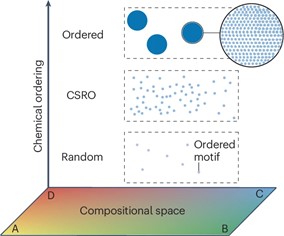
Figure 2. Schematic illustration of the compositional space and chemical structural states in high-entropy alloys.
The State Key Laboratory for Mechanical Behavior of Materials at Xi’an Jiaotong University serves as the corresponding institution for the paper. Professor Jun Ding is the sole author and corresponding author. His research focuses on atomic-scale structure-property relationships in high-entropy alloys and metallic glasses.
Paper link: https://doi.org/10.1038/s41578-025-00887-y
Professor Jun Ding’s research homepage: https://jdmse.github.io/en/


